RealTime-Glo™ MT Cell Viability Assay

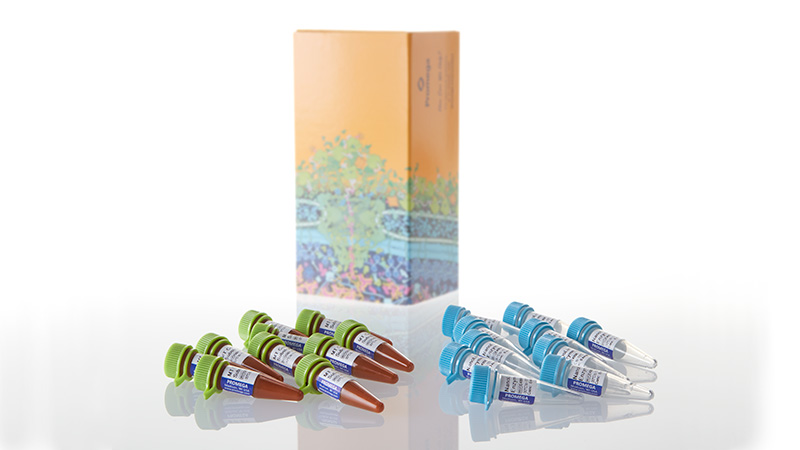
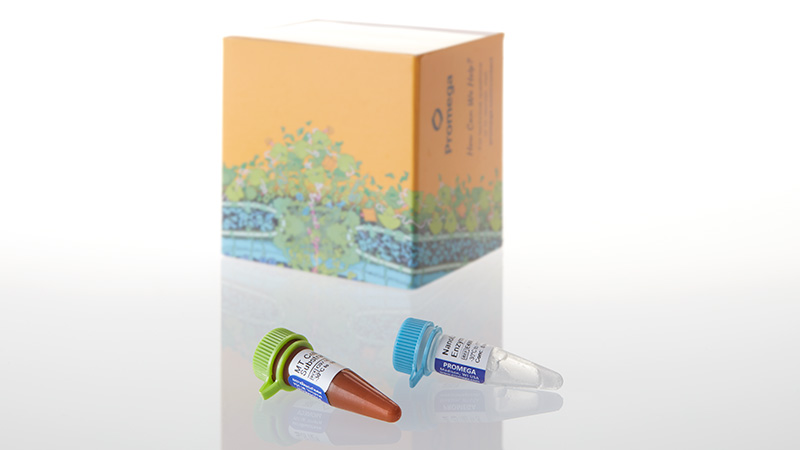
Monitor Cell Viability in Real Time
- Save time, cell culture and reagent costs
- Rapidly detect changes in cell viability


Catalog Number:
Size
Catalog Number: G9711
Catalog Number: G9712
Catalog Number: G9713
Why Use the RealTime-Glo™ MT Cell Viability Assay?
With the RealTime-Glo™ MT Cell Viability Assay, you can monitor cell viability continually in the same sample well up to 72 hours to obtain more information about the mode of action of a treatment with regard to time and dose dependence. The assay reagent can be added to cells during plating, during treatment or at the end of treatment. No cell washing, media removal or further additions are required.
The nonlytic nature and rapid response of the assay make it possible to monitor cell viability over time in the same well, enabling easy multiplexing with other cell-based assays or downstream applications. The assay measures the reducing potential of viable cells and is ATP-independent, providing an orthogonal method for viability or cytotoxicity determination.
Learn how the RealTime-Glo™ MT Cell Viability Assay can be used to assess drug toxicity in organoids.
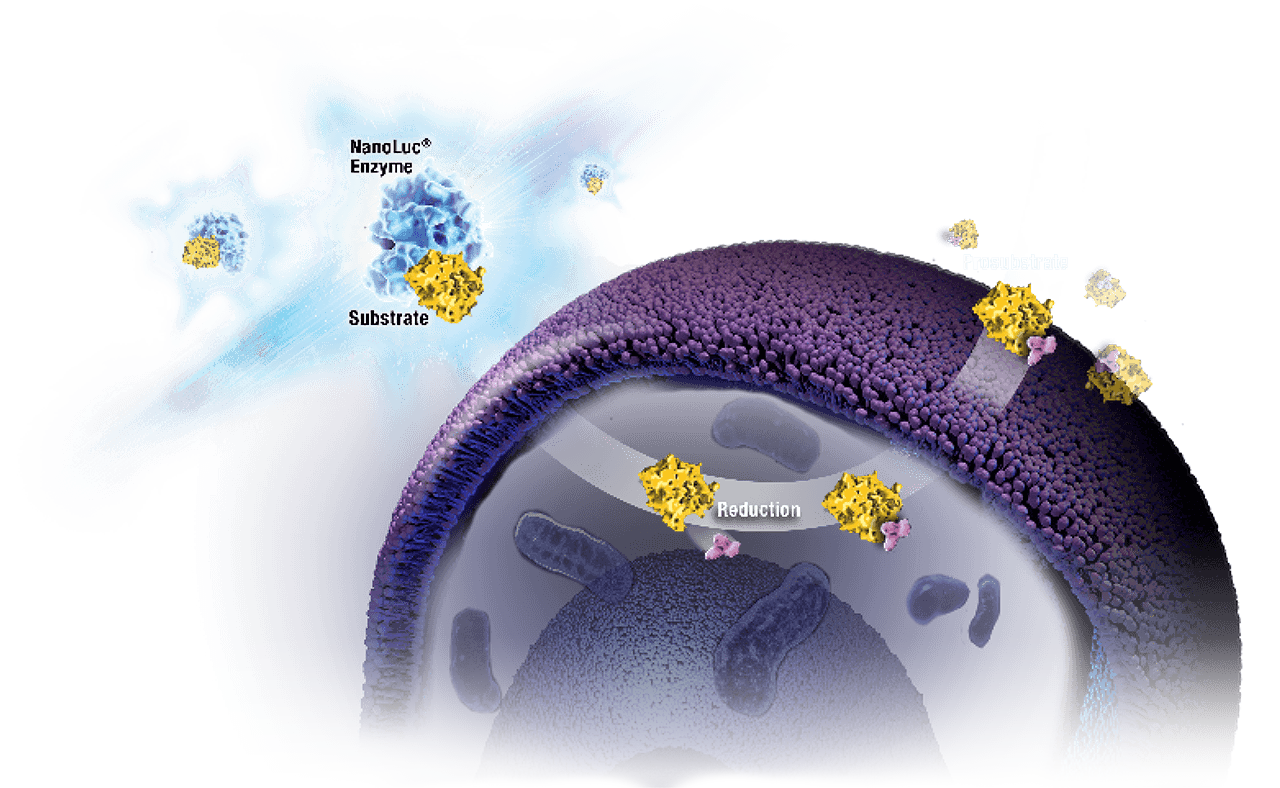
The RealTime-Glo™ Assay Measures Reducing Potential, A Well-Established Indicator of Cell Viability
Assay Principle
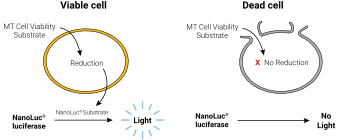
In the RealTime Glo™ MT Cell Viability Assay, a non-lytic NanoLuc® Luciferase reaction occurs in the culture medium. NanoLuc® Luciferase and MT Cell Viability Substrate are added to cell culture media. The MT Cell Viability Substrate then diffuses into cells where it is reduced to form a NanoLuc® Substrate, which exits the cell and is used rapidly by NanoLuc® Luciferase in the media. Only metabolically active cells can reduce the substrate, and light production is proportional to the number of live cells in culture. Dead cells cannot reduce the substrate.
Save Time, Cell Culture and Reagent Costs
One RealTime-Glo™ Assay Plate Yields the Same Data as Many Endpoint Assay Plates
Five hundred A549 cells were plated in medium containing the RealTime-Glo™ MT Reagents in 384-well plates and various concentrations of bortezomib. The luminescence signal was determined from each well every hour for 72 hours in a Tecan M200 plate reader with gas control module (37°C/5% CO2).
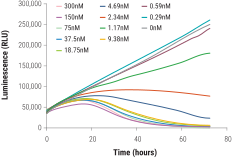
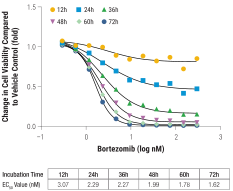
Data from specific time points plotted to calculate EC50 at these time points.
Rapidly Detect Changes in Cell Viability
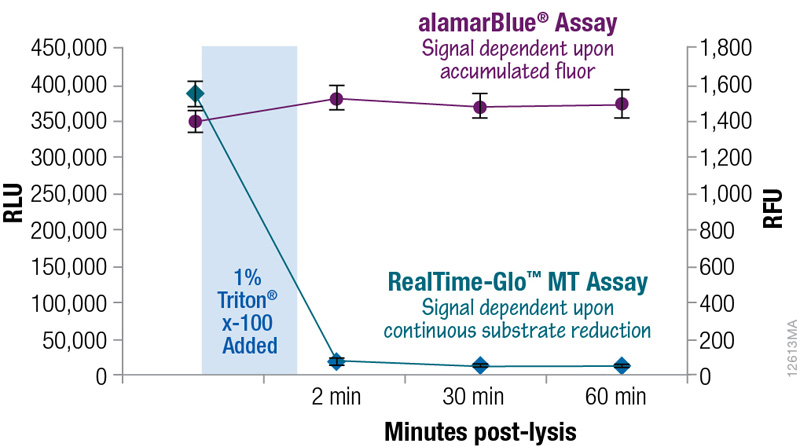
The RealTime-Glo™ MT Cell Viability Assay generates a luminescent signal that is dependent upon continuous reduction of the MT cell viability substrate by viable cells and rapid turnover by NanoLuc® Luciferase. Conventional assays based on reducing potential (alamarBlue, MTT) are accumulation-based and do not allow real-time detection of cell death in the same well. In this experiment, A549 cells were treated with 1% Triton® X-100. Viability assay reagents were applied and incubated for the indicated times post-treatment.
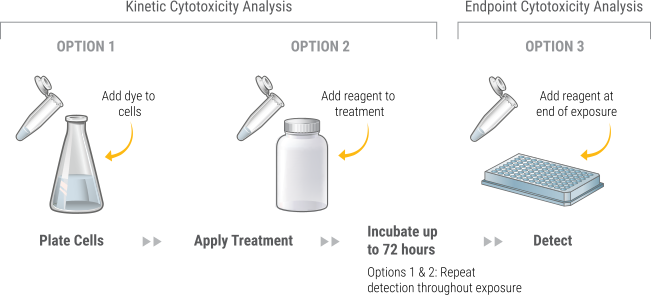
Add to Cells at Plating, Dosing or Endpoint
Flexible Assay Setup
Perform real-time cell viability monitoring or endpoint detection. You decide how to set up your assay. Add the RealTime-Glo™ Reagent to cells at any time point when cell viability readings are desired. The assay is compatible with high-throughput screening in 96-, 384- and 1536-well plates.
Multiplex with Other Assays for More Information Per Sample
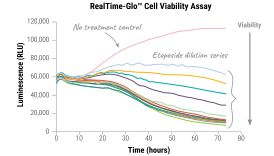
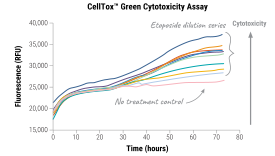
The nonlytic, live-cell RealTime-Glo™ Assay is compatible with downstream applications and allows multiplexing with other assays, conserving precious samples and providing more informative data per sample.
Protocols
Specifications
Catalog Number:
What's in the box
| Item | Part # | Choose a size |
|---|---|---|
NanoLuc® Enzyme, 1,000X |
E499A | 1 × 10μl |
MT Cell Viability Substrate, 1,000X |
G971A | 1 × 10μl |
SDS
Search for SDSCertificate of Analysis
Use Restrictions
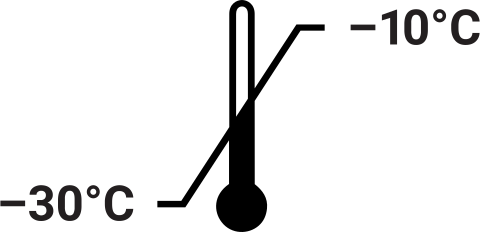
For Research Use Only. Not for Use in Diagnostic Procedures.Storage Conditions
What's in the box
| Item | Part # | Choose a size |
|---|---|---|
NanoLuc® Enzyme, 1,000X |
E499A | 10 × 10μl |
MT Cell Viability Substrate, 1,000X |
G971A | 10 × 10μl |
SDS
Search for SDSCertificate of Analysis
Use Restrictions
For Research Use Only. Not for Use in Diagnostic Procedures.Storage Conditions
What's in the box
| Item | Part # | Choose a size |
|---|---|---|
NanoLuc® Enzyme, 1,000X |
E499B | 1 × 100μl |
MT Cell Viability Substrate, 1,000X |
G971B | 1 × 100μl |
SDS
Search for SDSCertificate of Analysis
Use Restrictions
For Research Use Only. Not for Use in Diagnostic Procedures.Storage Conditions
Resources
Articles
- Reproducible Drug Screening Assays Using Single Organoids
- Determination of Optimal Culturing Conditions of Patient Derived Colorectal Cancer Organoids
- High-throughput toxicity assessment of chemical mixtures in human hepatic organotypic cultures
- Folate and Vitamin B12 Deficiency Exacerbate Inflammation during Mycobacterium avium paratuberculosis (MAP) Infection.
Inne
- Application Note: Manual RNA Purification from 3D Microtissues after RealTime-Glo™ MT Cell Viability Assay
- Webinar: Real-Time Cell Health Assays Reveal More Relevant Biology
- Application Note: Automated RealTime-Glo™ MT Cell Viability Assay Multiplexed with CellTox™ Green Cytotoxicity Assay on the CyBio FeliX from Analytik Jena
- Application Note: Automated RealTime-Glo™ MT Cell Viability Assay on the CyBio FeliX from Analytik Jena
Related Products
Similar Products
CellTox™ Green Cytotoxicity Assay
Measures changes in membrane integrity. Kinetically monitors cytotoxicity up to 72 hours with multiplex capability.
G8741, G8742, G8743, G8731
RealTime-Glo™ Apoptosis and Necrosis Assay
A one-step, plate-based assay for continually monitoring apoptosis progression.
JA1011, JA1012, JA1000, JA1001
CellTiter-Glo® 2.0 Cell Viability Assay
Updated CellTiter-Glo® Cell Viability Assay with improved reagent stability. Quantifies cell proliferation based on ATP detection.
G9241, G9242, G9243
Lumit® Cell Proliferation Assay (Human Ki-67)
Easy add-mix-measure plate-based assay for tracking hKi-67 without washing steps or specialized detection equipment.
GC1000, GC1002, GC1001
Frequently Used With
LDH-Glo™ Cytotoxicity Assay
Bioluminescence-based LDH assay for sensitive detection of cytotoxicity in samples low in cell number, including 3D microtissues.
J2380, J2381
Caspase-Glo® 3/7 Assay System
An easy-to-use, plate-based luminescent assay for detecting caspase-3/7 activity.
G8090, G8091, G8093, G8092
GloMax® Discover System
High-performance microplate reader for detecting luminescence, fluorescence and absorbance.
GM3000