Pyruvate-Glo™ Assay
Easy, Sensitive Pyruvate Assay Kit
- Compatible with cells, media and serum samples
- Streamlined in-well sample preparation protocol
- Scalable to 384-well plates for HTS applications

Catalog Number:
Size
Catalog Number: J4051
Catalog Number: J4052
Rapid Pyruvate Detection from Diverse Samples
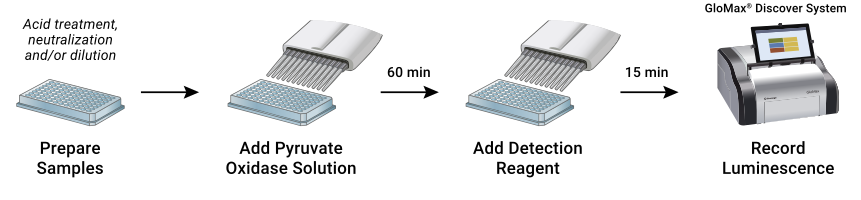
The Pyruvate-Glo™ Assay is a fast and sensitive method for detecting pyruvate in various biological samples, such as cultured cells, media and serum. Based on bioluminescent technology, the Pyruvate-Glo™ Assay can detect subtle changes in glycolysis and mitochondrial metabolism in just 75 minutes. Its streamlined sample preparation protocol involves acid treatment and neutralization directly in the assay wells, eliminating the need for cell collection, centrifugation and spin columns. The assay is adaptable to a 384-well format, facilitating quick analysis of many samples.
How the Pyruvate-Glo™ Assay Works
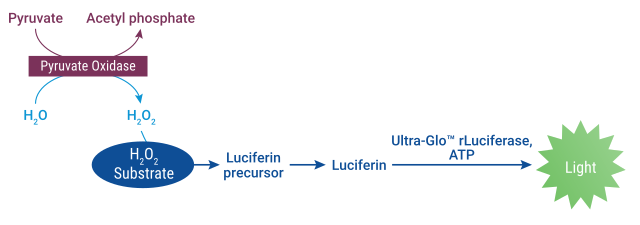
Pyruvate Oxidase catalyzes the reduction of pyruvate to acetyl phosphate, generating H2O2. In the presence of H2O2, the H2O2 Substrate is converted into luciferin. This reaction is detected by Ultra-Glo™ Recombinant Luciferase, which emits light proportionate to the amount of pyruvate in the sample.
Simple Assay Protocol Saves Time
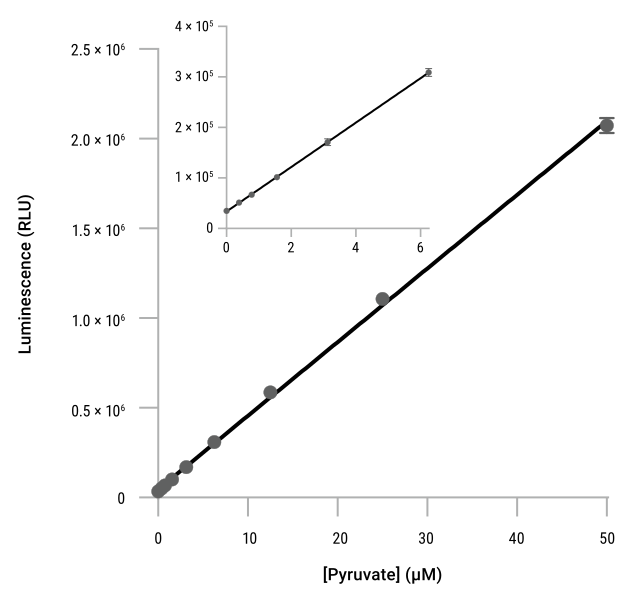
Accurately Detect the Smallest Changes in Pyruvate
|
Sensitivity (S/B >5) |
1.56μM |
|
|
Limit of Detection (S/N >3) |
400nM |
|
|
Linear Range |
400nM to 50μM |
|
|
Maximum Assay Window (S/B) |
>150 |
|
Measure the Effect of Metabolic Inhibitors on Cellular Pyruvate Levels
The Pyruvate-Glo™ Assay can be used to monitor both intracellular and extracellular pyruvate in cell culture, including quickly assessing the metabolic effects of drug treatment.
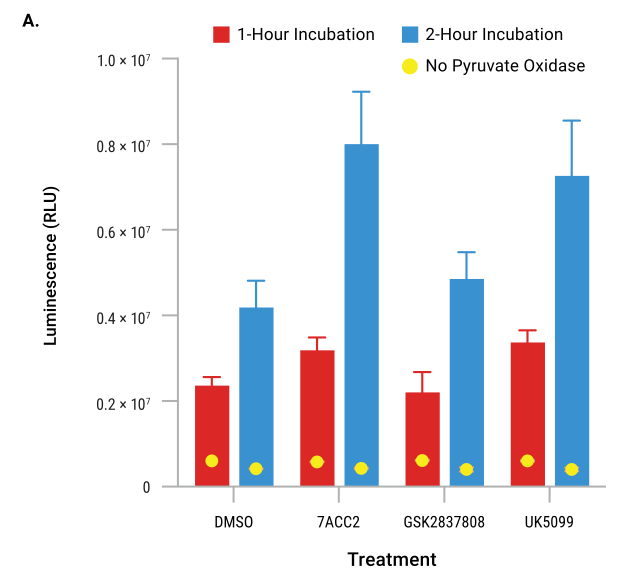
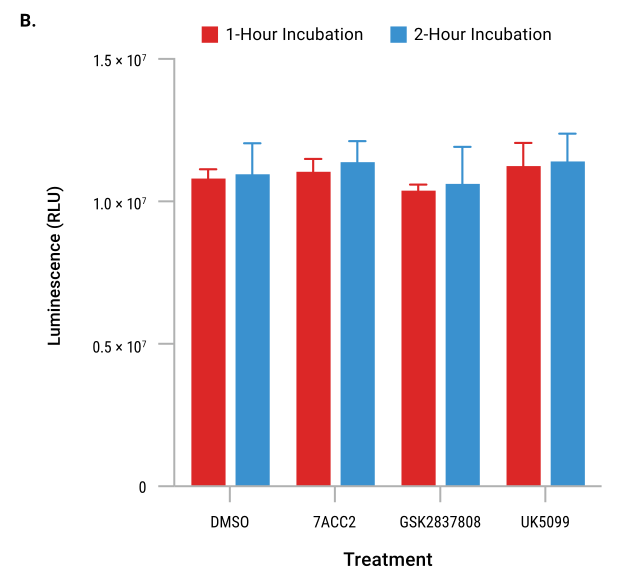
Monitor metabolic effects of drug treatment with the Pyruvate-Glo™ Assay. K562 cells in suspension were incubated with DMSO (negative control), 10μM GSK2837808 (lactate dehydrogenase A inhibitor), 10μM 7ACC2 (monocarboxylate transporter 1-4 [MCT1-4] inhibitor) or 10μM UK5099 (mitochondrial pyruvate carrier inhibitor) for one to two hours. Following the incubations, half the volume was analyzed using the Pyruvate-Glo™ Assay (Panel A), and half the volume was removed for viability analysis using CellTiter-Glo® Luminescent Cell Viability Assay (Panel B). As expected, pyruvate levels increased approximately twofold after a 2-hour incubation with UK5099 and 7ACC2 compared to the DMSO control. There was no decrease in viability during treatment when compared to the DMSO control. All data represent an average of three replicates.
Do you want to learn more about our cellular energy metabolism tools and the innovative technology that powers these assays?
Protocols
Complete Protocol
Specifications
Catalog Number:
What's in the box?
| Item | Part # | Size |
|---|---|---|
H2O2 Substrate, 10mM |
G882A | 1 × 40μl |
Signal Enhancer Solution |
G883A | 1 × 100μl |
H2O2 Substrate Dilution Buffer |
G922A | 1 × 2ml |
Luciferin Detection Solution |
J135A | 1 × 5ml |
Neutralization Buffer |
J153A | 1 × 15ml |
0.6N HCl |
J402A | 1 × 15ml |
Pyruvate Oxidase (POX) |
J416A | 1 × 130μl |
Pyruvate, 10mM |
J417A | 1 × 50μl |
d-Cysteine, 100X |
V251A | 1 × 100μl |
SDS
Search for SDSCertificate of Analysis
Use Restrictions
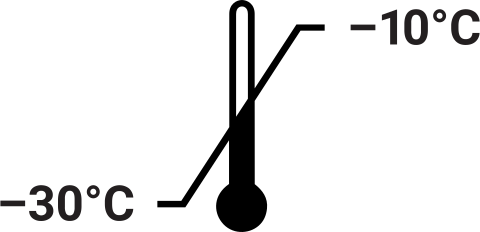
For Research Use Only. Not for Use in Diagnostic Procedures.Storage Conditions
What's in the box?
| Item | Part # | Size |
|---|---|---|
H2O2 Substrate, 10mM |
G882B | 1 × 200μl |
Signal Enhancer Solution |
G883B | 1 × 500μl |
H2O2 Substrate Dilution Buffer |
G922B | 1 × 10ml |
Luciferin Detection Solution |
J135B | 1 × 50ml |
Neutralization Buffer |
J153A | 1 × 15ml |
0.6N HCl |
J402A | 1 × 15ml |
Pyruvate Oxidase (POX) |
J416B | 1 × 1300μl |
Pyruvate, 10mM |
J417A | 1 × 50μl |
d-Cysteine, 100X |
V251B | 1 × 500μl |
SDS
Search for SDSCertificate of Analysis
Use Restrictions
For Research Use Only. Not for Use in Diagnostic Procedures.Storage Conditions
Resources
Articles
Posters
Related Products
Similar Products
Glucose-Glo™ Assay
Easily detect glucose from a variety of biological samples.
J6021, J6022
Lactate-Glo™ Assay
Biolomunescent assay that quickly detect lactate from a variety of sample types.
J5021, J5022
Malate-Glo™ Assay
Fast and sensitive method for detecting L-malate in various biological samples.
JE9100, JE9200
Metabolite-Glo™ Detection System
Bioluminescent NAD(P)H detection toolkit for metabolite detection in biological samples.
J9030, J9040
Frequently Used With
RealTime-Glo™ MT Cell Viability Assay
A bioluminescent method to kinetically monitor viability in cell culture up to 72 hours.
G9711, G9712, G9713
CellTiter-Fluor™ Cell Viability Assay
A non-lytic, fluorescent cell viability assay with multiplex capability.
G6080, G6081, G6082
CellTiter-Glo® 2.0 Cell Viability Assay
Updated CellTiter-Glo® Cell Viability Assay with improved reagent stability. Quantifies cell proliferation based on ATP detection.
G9241, G9242, G9243
GloMax® Discover System
High-performance microplate reader for detecting luminescence, fluorescence and absorbance.
GM3000